Sergiy Prokhoriv is a Programme Manager at the Dag Hammarskjöld Foundation. His work focuses on advancing the effectiveness and efficiency of the UN development system by improving the quality and availability of funding. He brings more than 14 years of experience working on social, behavioural, and environmental change in the areas of health, nutrition, education, violence prevention, and social policy. Prokhoriv holds a master’s degree in European Affairs from Lund University and a master’s degree in Communication for Development from Malmö University.
Dr Bernhard Reinsberg is a Professor of International Political Economy and Development at the School of Social and Political Sciences at the University of Glasgow. His research is on the policies and politics of international development organisations and development cooperation more generally.
Hon. Paddy Torsney has served as the IPU Permanent Observer to the United Nations in New York since 2014. She was a Canadian Member of Parliament from 1993 to 2006, serving as vice-chair of the Justice and Finance committees and as a member of the Industry, Science, and Technology, Status of Women, and International Development committees. Hon. Paddy Torsney was Parliamentary Secretary to the Minister of the Environment (1998–2000) and the Minister of International Cooperation (2004–2006), and the inaugural chair of the Liberal Women’s Caucus. She serves as vice-president of the Canadian Landmine Foundation. She has a Bachelor of Commerce from McGill University in Montreal.
Alessandro Motter has served in progressively senior roles as an adviser on economic and social affairs at the Office of the Permanent Observer of the IPU to the United Nations in New York. Before joining the IPU, Alessandro Motter worked as a policy research consultant at UN DESA and UNESCO. He was a constituency and legislative assistant to a Member of the Provincial Parliament of Ontario, Canada. He holds a BA in Political Science from the University of Toronto and an MA in International Political Economy from York University (Toronto).
Introduction
The profound funding crisis currently faced by the United Nations is reflective of a broader erosion of trust in the multilateral order. The crisis, characterised by budget cuts and an over-reliance on unstable funding streams, has been driven by intensifying geopolitical tensions, austerity policies and the rise of populist movements, particularly within key donor countries.1
Diplomatic discourse and foreign policy typically focus on the executive actions of governments, leaving the role of parliaments and parliamentarians in UN affairs under-examined. This is a critical oversight, as national legislatures are not only the ultimate stewards of the public purse but also the primary link between international commitments and domestic approval.
To address this gap, the Dag Hammarskjöld Foundation and the Inter-Parliamentary Union, in partnership with Professor Bernhard Reinsberg from the University of Glasgow, conducted a global survey of parliamentarians aimed at gauging their views on and knowledge of the UN, particularly its funding. A total of 204 parliamentarians from 83 countries participated in the survey over a period of four weeks in March–April 2026.
The survey’s overarching purpose was to evaluate the political climate surrounding multilateral aid from the point of view of parliamentarians. More specifically, the survey sought to assess the following:
- Their level of knowledge regarding UN funding (i.e. how parliamentarians perceive the performance of current funding modalities based on Member State contributions and their appetite for alternative financing streams).
- Their attitudes toward the UN budget (i.e. the degree of commitment lawmakers feel toward the UN system and UN funding).
- Their perceptions of the relevance and purpose of UN funding (i.e. which UN activities parliamentarians perceive as most deserving of funding considering current global challenges).
By centring the voices of the parliamentarians who authorise national expenditures in donor countries, as well as their counterparts fulfilling an important oversight role in programme countries hosting UN operations, this article seeks to identify pathways conducive to a sustainable multilateralism.
Methodology
The survey team emailed an invitation to every parliamentarian listed in the Inter-Parliamentary Union database, covering the IPU’s 183 Member Parliaments (N = 12,000). The response rate was 1.7% (N = 204), of which 125 respondents answered all the questions. Low response rates are a recognised challenge in surveys of political and institutional elites.2 Because participation was voluntary and the response rate was low, the findings should be interpreted as indicative of the views of participating parliamentarians rather than as representative of parliamentarians globally.
To capture a diverse range of opinions, we analysed the data at two levels. Internationally, based on the World Bank’s FY26 income classification, we compared high-income countries (HICs) with non-high-income countries (non-HICs) to test whether income level influences support for the UN or knowledge of UN funding. Domestically, because parliamentarians were asked whether they belonged to a governing or non-government party, the responses were disaggregated to distinguish between government-aligned and non-government MPs. A total of 190 parliamentarians answered the question: 106 identified themselves as members of a governing party or coalition, while 84 identified themselves as members of a non-government party.3
For the purposes of the survey, the UN budget was understood as total UN revenue comprising four main financing instruments: assessed contributions, voluntary core contributions, earmarked contributions, and revenue from other activities.
International Perspectives: HICs and Non-HICs
One of the survey’s key objectives was to determine whether parliamentarians consider the UN’s current level of funding adequate for carrying out its mandates across peace and security, sustainable development, and human rights. As illustrated in Figure 1, there is strong support among respondents for increasing UN funding, a sentiment particularly prevalent among non-HICs (80%). Even within HICs, expanding the budget remains the most popular choice at 50%, outpacing preferences for budget reductions (25%) or maintaining the status quo (25%).
This favourable outlook may partially be down to survey framing: the question addressed the UN budget without explicitly linking increases to a rise in the respondent’s own national contributions. This aligns with the political economy literature on ‘fiscal illusions’, which suggests stakeholders are more likely to support expanded institutional mandates when the direct financial burden on their own taxpayers is obscured.4
Funding Preferences for the UN Budget
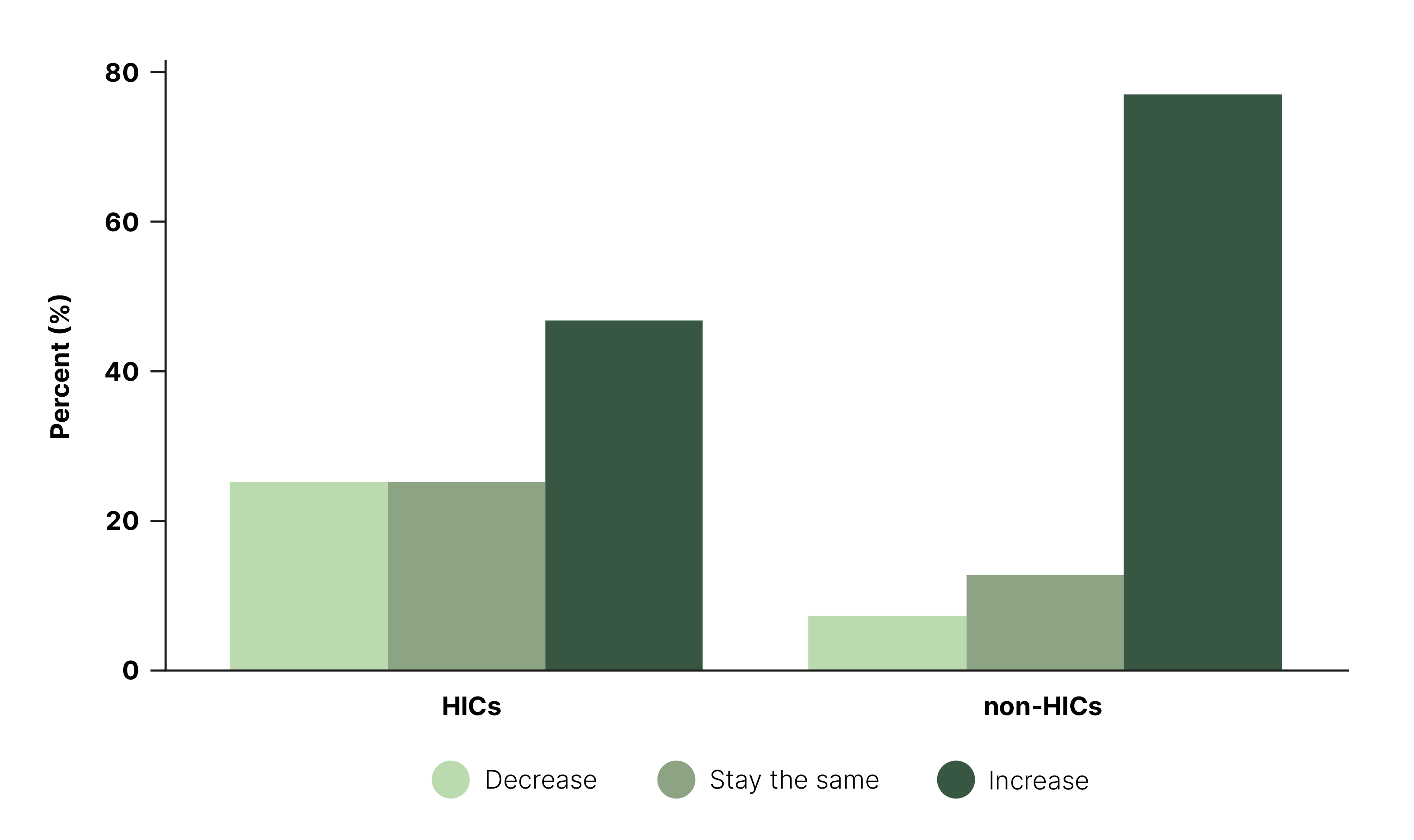
Notes: N=129 non-missing responses, comprising HICs (N=54) and non-HICs (N=75). Numbers by subgroup (decrease/stay the same/increase): HICs (14/14/26), non-HICs (7/26/42).
Taking the results on UN budget preferences at face value, we can examine whether respondents support a larger UN budget because they consider its work relevant. Figure 2 shows that across both HICs and non-HICs, respondents consider the UN ‘relevant’ on a four-point scale (where ‘1’ is ‘not at all relevant’ and ‘4’ is ‘very relevant’). Moreover, they perceive the UN as relevant both for their own country and at the global level.
Relevance of the UN
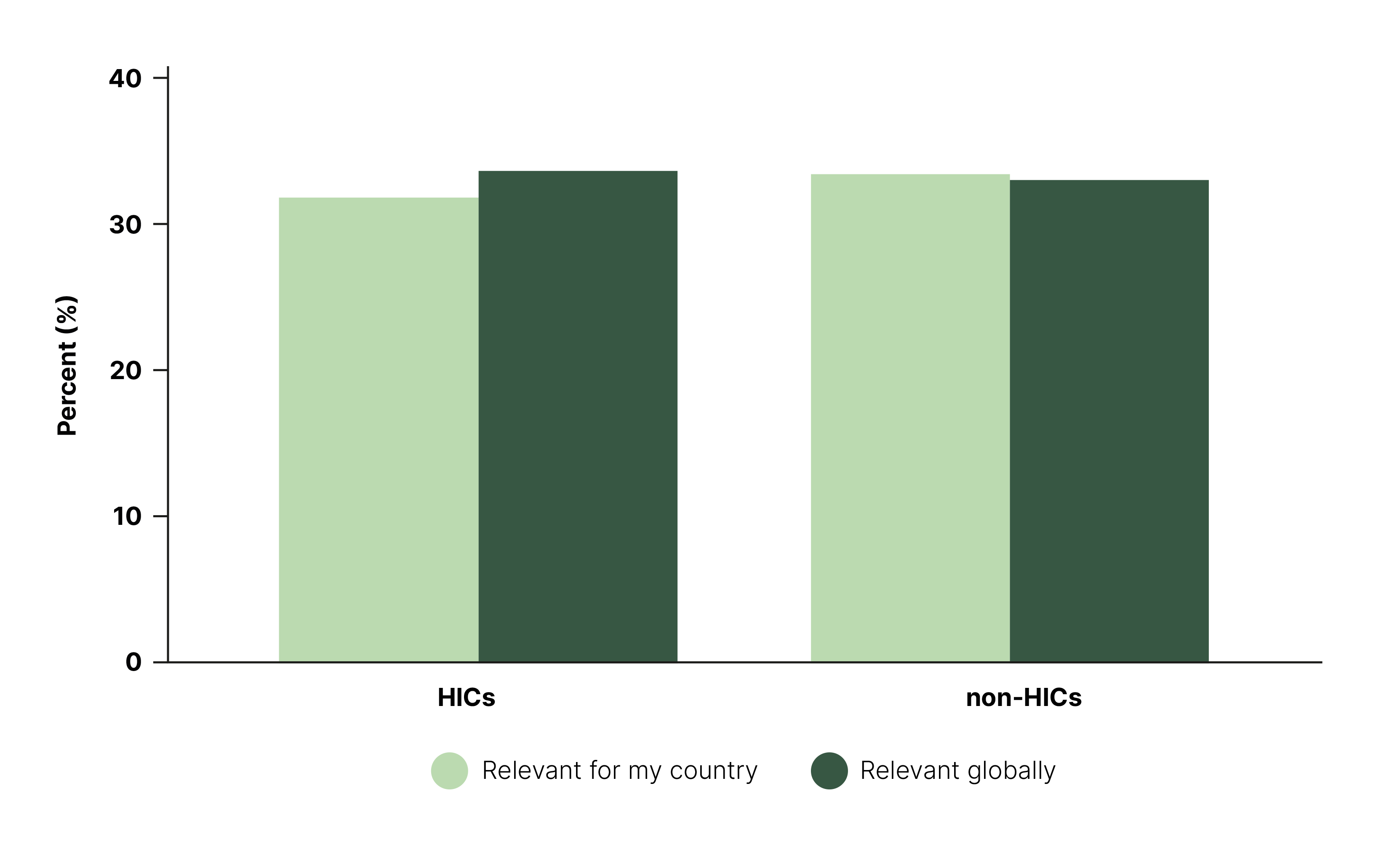
Notes: Relevant globally: N=129, HICs (N=63) and non-HICs (N=66). Relevant for my country: N=128, HICs (N=61) and non-HICs (N=67). Answer scale from ‘1’ (not at all relevant) to ‘4’ (very relevant). Missing answers excluded.
Respondents showed relatively little differentiation in their ratings of the effectiveness of different UN funding tools. On a four-point scale, where 1 represented ‘not effective’ and 4 represented ‘very effective’, the different UN funding mechanisms received similar mean scores, ranging from 2.3 to 2.6 (Figure 3). In HICs, core funding is seen as most effective, along - side earmarked funding. Pooled funding is seen as relatively less effective. These results are surprising given the emerging evidence in academic work and UN publications on the added value of core funding and the performance costs of progressive earmarking.5 The results in non-HICs are even more puzzling: respondents see core funding as least effective, followed by pooled funding and then earmarked funding.
Perceived Effectiveness of UN Financing Mechanisms
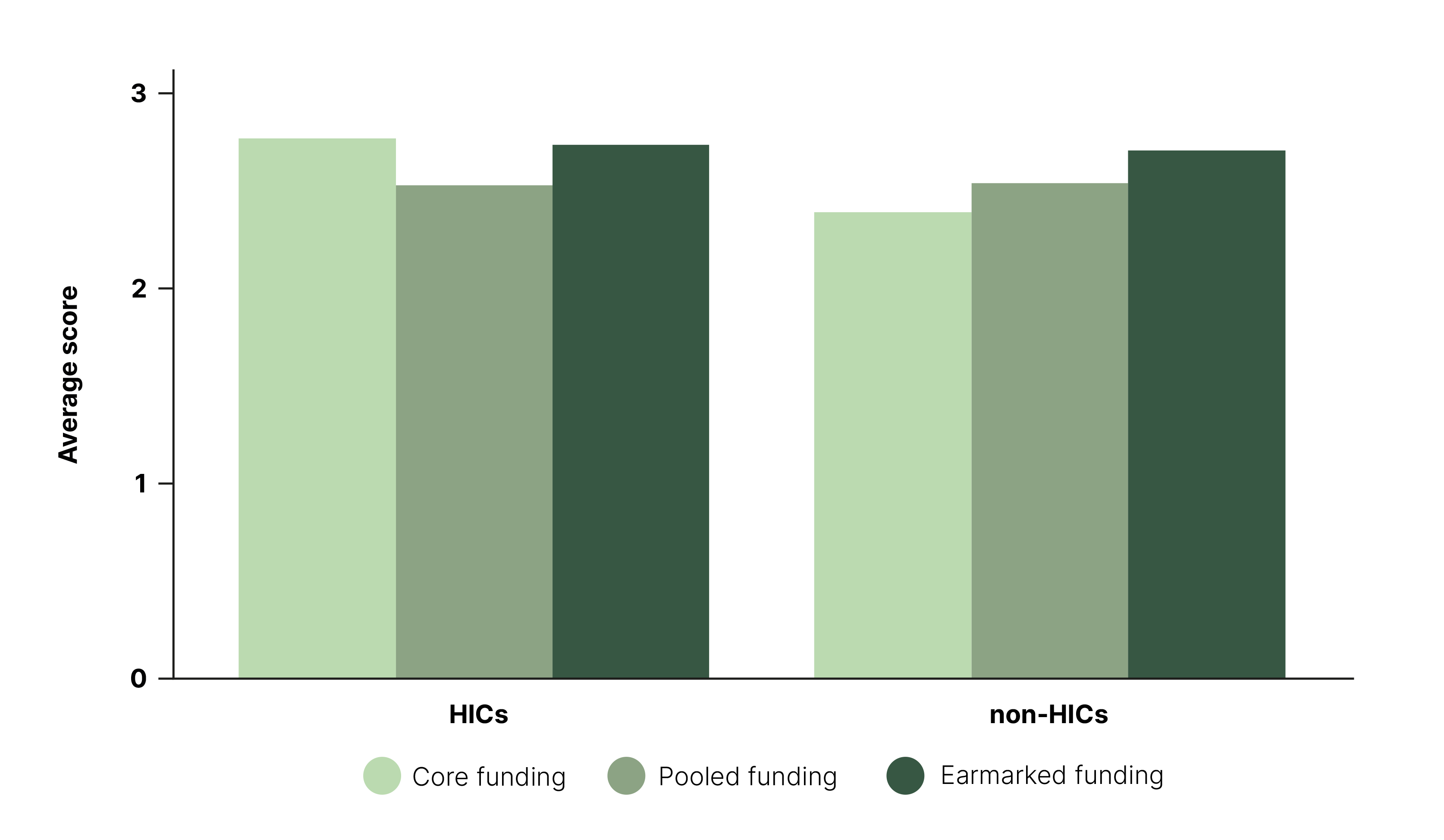
Notes: Core funding: N=107, HICs (N=49) and non-HICs (N=58). Earmarked funding: N=105, HICs (N=48) and non-HICs (N=57). Pooled funding: N=105, HICs (N=46) and non-HICs (N=59). Answer scale from ‘1’ (not effective) to ‘4’ (very effective). Missing answers excluded.
One possible explanation is that non-HIC respondents also report lower levels of knowledge about UN finances than their HIC counterparts. As Figure 4 shows, less than a quarter of non-HIC parliamentarians consider themselves sufficiently knowledgeable about the issue, compared with almost half of the HIC parliamentarians.
Share of Respondents Who Perceive Themselves as Knowledgeable About UN Finances
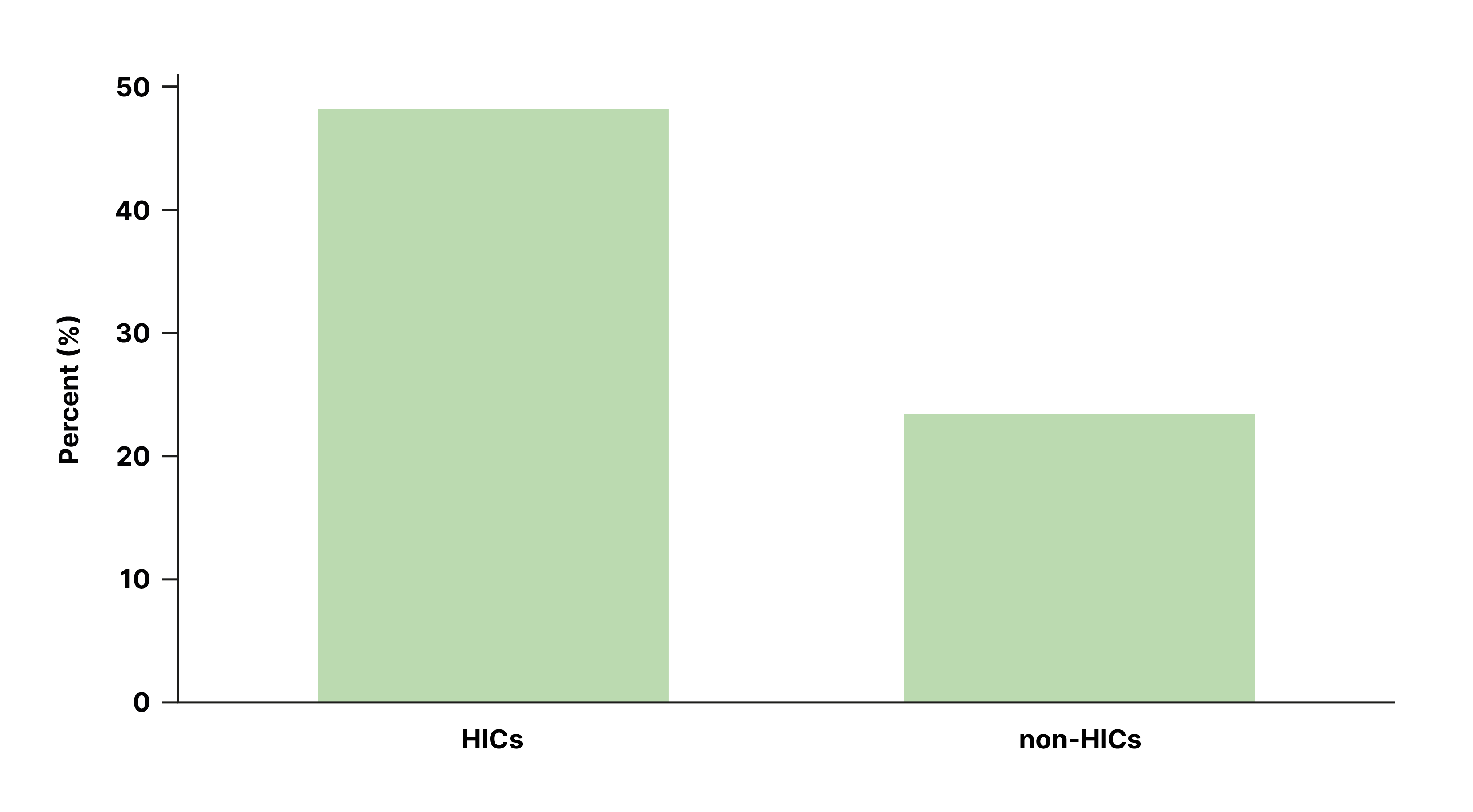
Notes: N=118, HICs (N=54) and non-HICs (N=64). Share is with respect to all respondents in an income group.
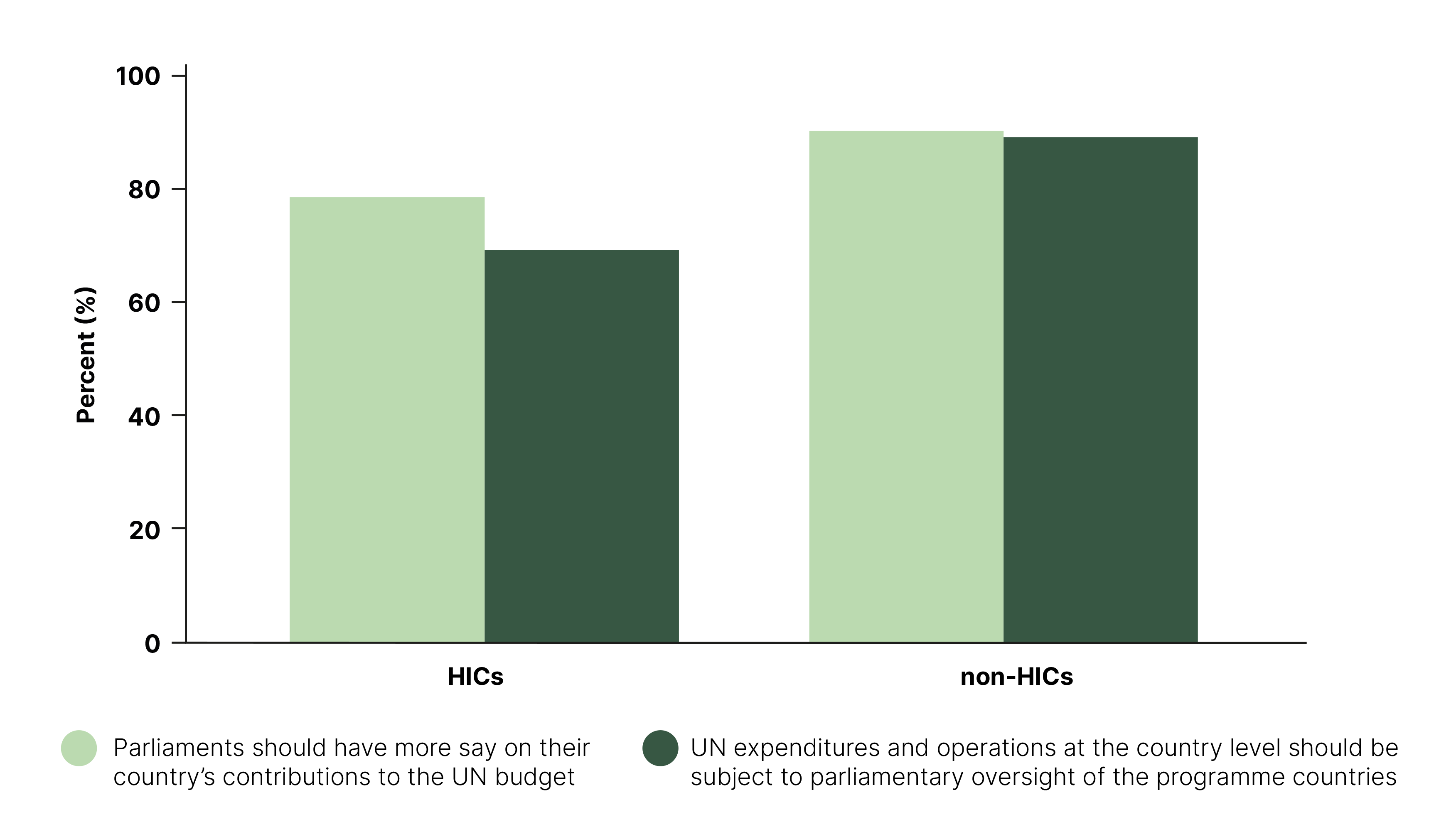
Despite these knowledge gaps, there is strong support for greater control by parliaments (Figure 5). First, respondents overwhelmingly (about 80% in HICs and almost 90% in non-HICs) agree with the statement that ‘parliaments should have more say on their country’s contributions to the UN budget’. Second, there is also overwhelming agreement (about 70% in HICs and again close to 90% in non-HICs) with the statement that ‘UN expenditures and operations at the country level should be subject to parliamentary oversight of the programme countries.’
Share of Respondents Favouring Greater Empowerment of Parliaments on UN Finances
If respondents want more control over UN spending, then what are their preferences concerning how UN funding should be used? Respondents were asked to indicate up to three priority issues from a predefined list of 12 items. Figure 6 shows the results, indicating some commonalities but also clear differences across country groups. Respon-dents from HICs prioritise conflict issues, followed by human rights, migration, and poverty. By contrast, non-HIC respondents believe poverty reduction should be the UN’s top priority, while the perceived importance of human rights, conflict, and climate change is roughly on a par with their HIC counterparts. More generally, non-HIC respondents see a greater role for the UN in a wider range of priority areas.
Share of Respondents Mentioning Specific Priority Areas (Up to Three)
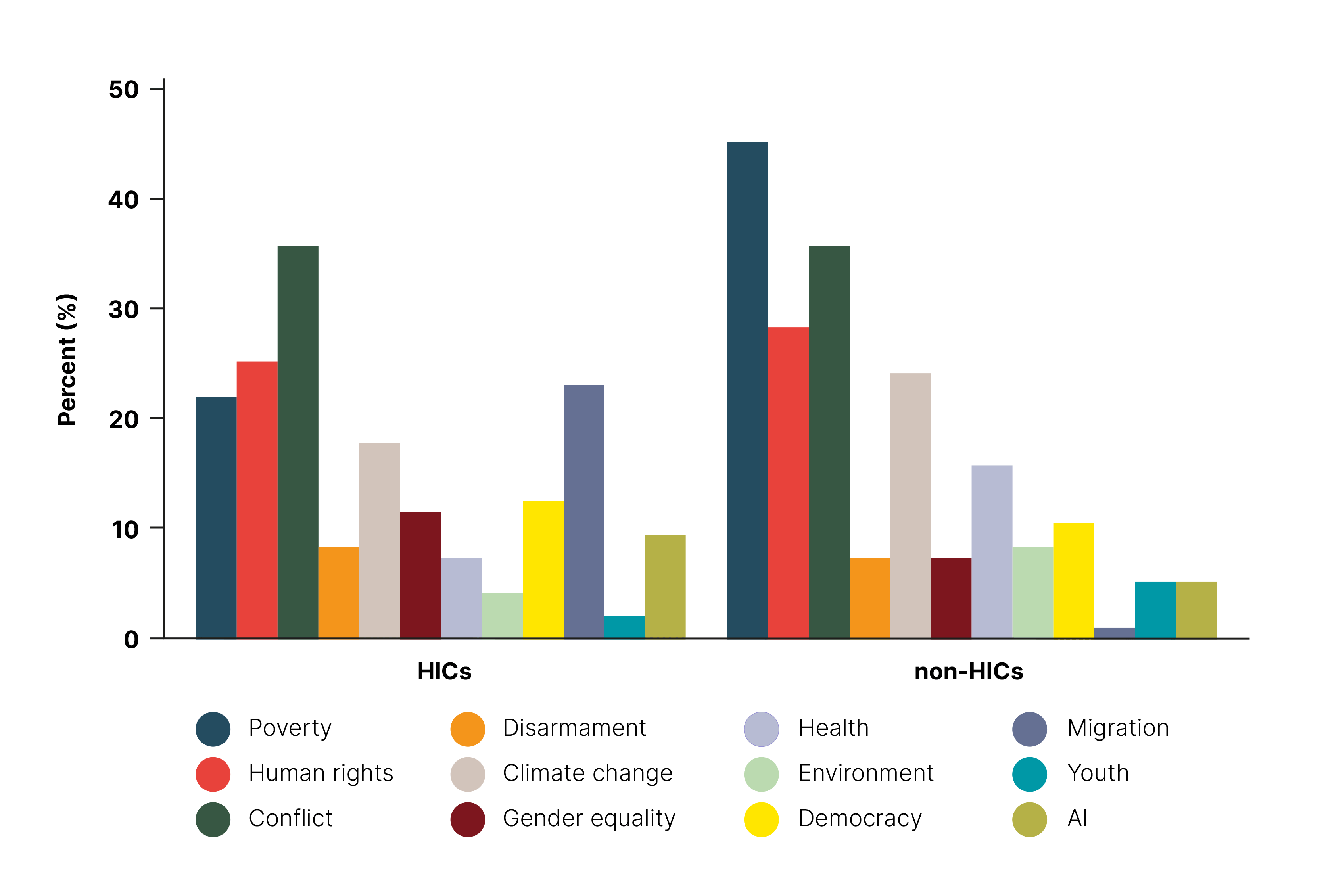
Notes: N=190 responses. Shares do not need to add up to 100% due to multiple mentions.
Disappointingly, respondents from both groups regard gender equality – long recognised as a keystone for all the UN’s work on peace and development – as being a relatively low priority.
Given that current funding levels for the UN, as mentioned in John Hendra’s article in this report6, are insufficient to support its various mandates, we asked about alternative forms of financing. The survey question referred to two commonly discussed proposals – an international financial transactions tax and a small tax on airfares – while also allowing respondents to indicate other forms of finance. Across country groups, only a minority of respondents explicitly support alternative financing modalities. Among HIC respondents, about 30% support a financial trans-actions tax and about 10% an airfare tax. The equivalent figures for non-HIC respondents are roughly 40% and 20% respectively (Figure 7).
Share of Respondents Supporting Alternative UN Financing Models
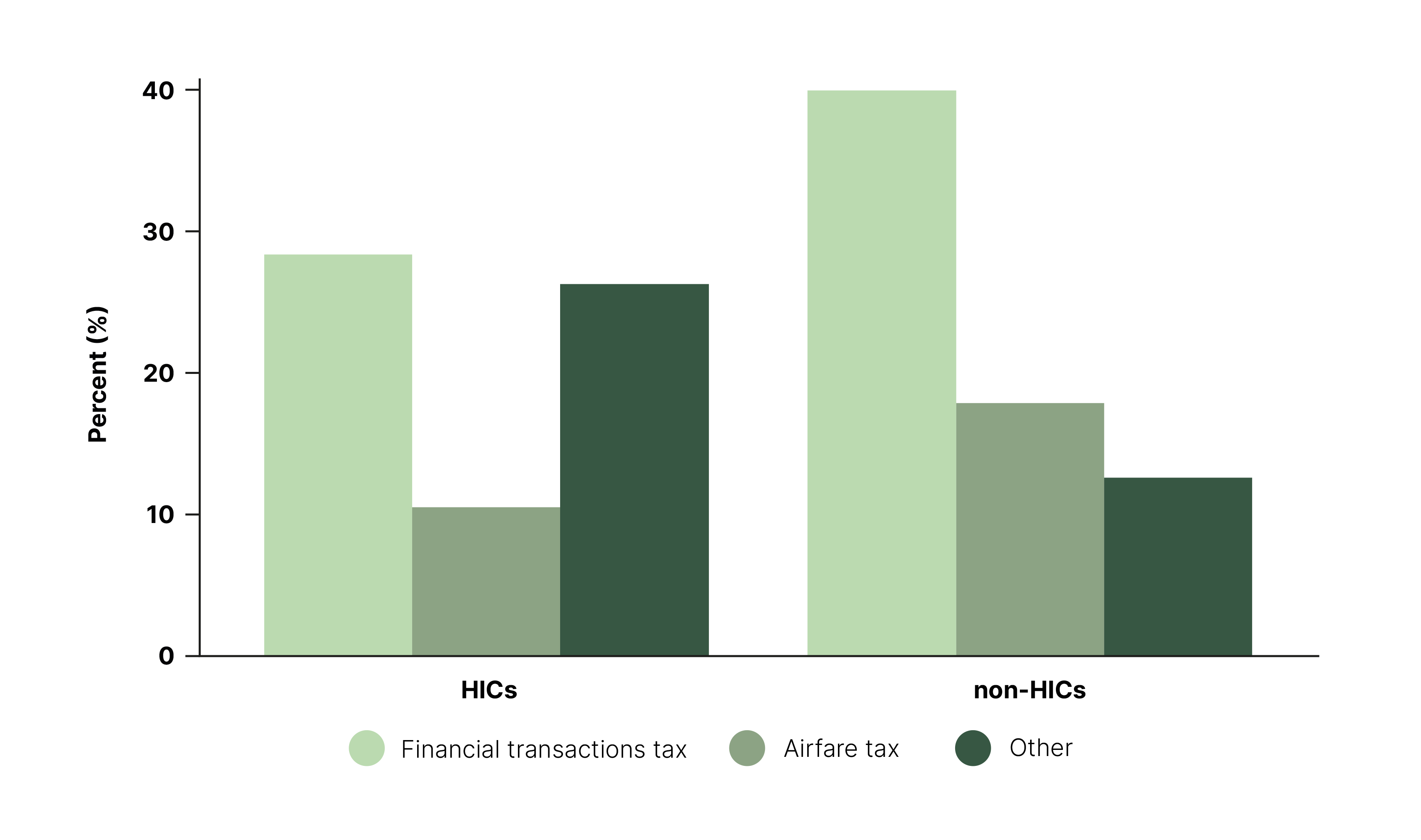
Notes: N=190, HICs (N=95) and non-HICs (N=95). Financial transactions tax: N=65, HICs (N=27) and non-HICs (N=38). Airfare tax: N=27, HICs (N=10) and non-HICs (N=17). Share of respondents relative to all responses in the income group.
Given that most parliamentarians surveyed believe Member State contributions will remain the UN’s primary source of funding, we asked whether there should be penalties for late payment of assessed contributions by UN Member States. Figure 8 shows strong support for such penalties, with about 80% of respondents in both groups supporting such measures.
Support for Penalties on Late Payment of Assessed Contributions
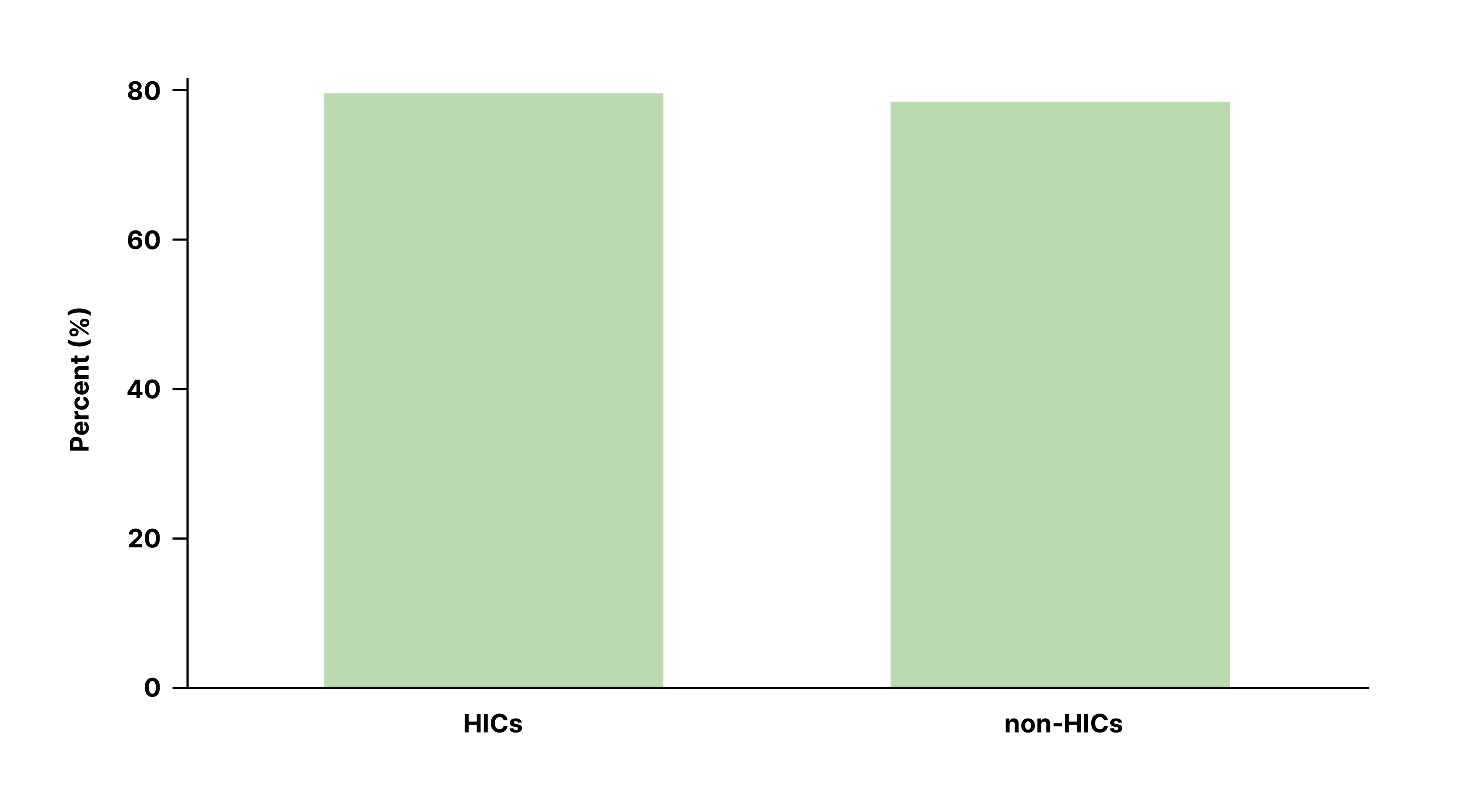
Notes: N=104, HICs (N=51) and non-HICs (N=53). Share is with respect to respondents within an income group.
The UN80 Initiative brings reform efforts under a single frame-work.7 Its three reinforcing workstreams cover efficiency in the UN Secretariat, mandate implementation review, and structural and programmatic realignments across the UN system.
Although the UN80 Initiative has been widely publicised, including through the Inter-Parliamentary Union8, many respondents remain unaware of it. Although about 60% of respondents in HICs are familiar with the initiative, this figure drops to 30% among non-HIC respondents. Of those who are aware, a solid majority supports it, with support higher in non-HICs (90%) than in HICs (70%). In addition, there is extremely high support for mergers of UN entities, with approval rates of over 80% in both groups (Figure 9).
UN80 Reform Positions
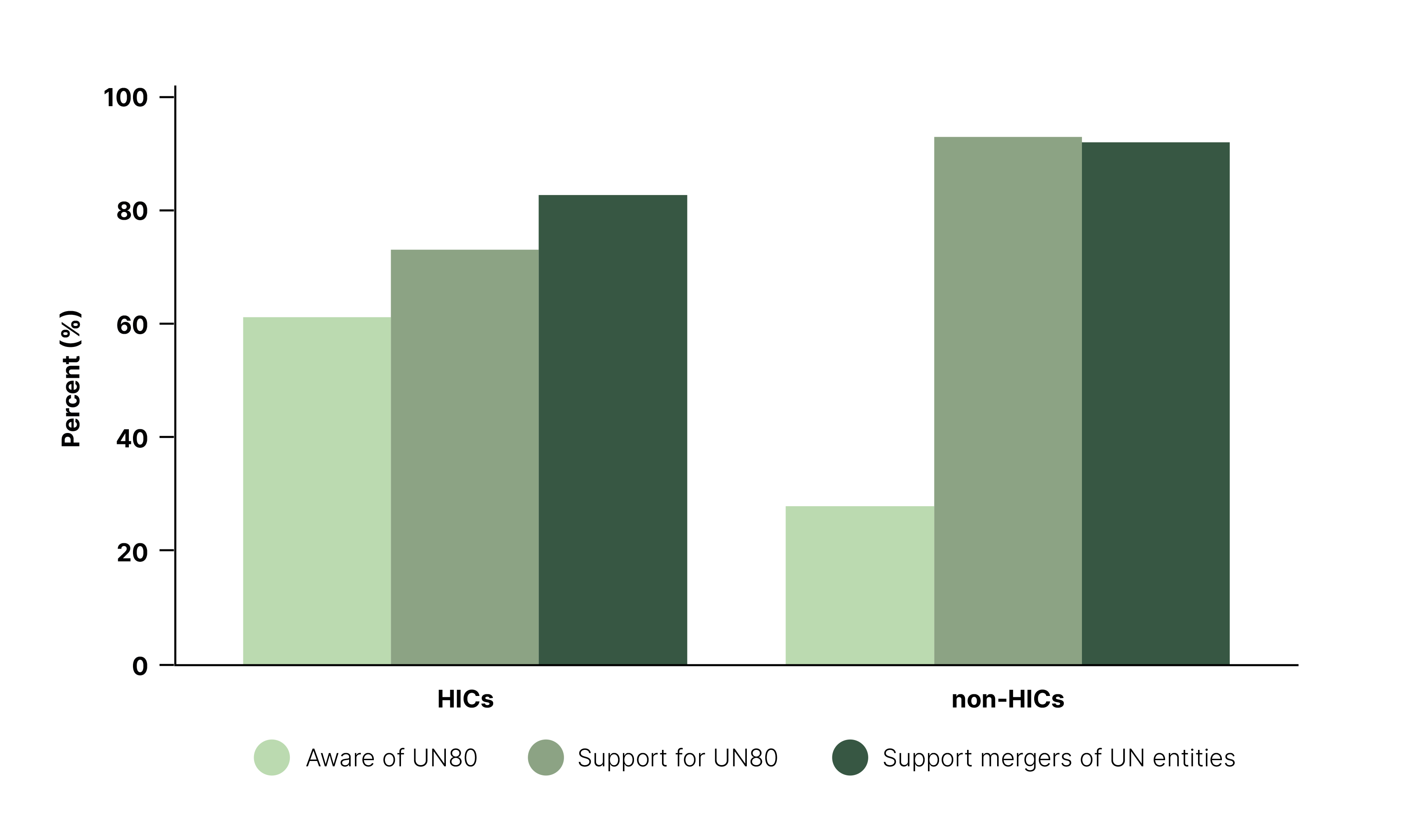
Notes: ‘Aware of UN80’ based on N=115, HICs (N=54) and non-HICs (N=61). Actual number of respondents who are aware of UN80 is N=50, HICs (N=33) and non-HICs (N=17). ‘Support for UN80’ only asked for respondents aware of UN80: N=40, HICs (N=26) and non-HICs (N=14). Actual level of support is N=32, HICs (N=19) and non-HICs (N=13). Support for mergers based on N=114, HICs (N=52) and non-HICs (N=62). Numbers of supporting respondents N=100, HICs (N=43) and non-HICs (N=57).
Domestic Perspectives: Partisan Alignment and UN Support
Despite our analysis allowing for differences in UN support between government-aligned parliamentarians and non-government party members, no strong differences emerge. Encouragingly, the findings suggest strong cross-party support for the UN.
Figure 10 breaks down funding preferences for the UN budget by partisan alignment. A strong majority – over 60% of respondents from both government and non-government parties – favour increasing the UN budget. Among the remaining 40%, however, respondents from government parties are more likely to favour maintaining current spending, while respondents from non-government parties are relatively more inclined to reduce the UN budget.
Funding Preferences for the UN Budget
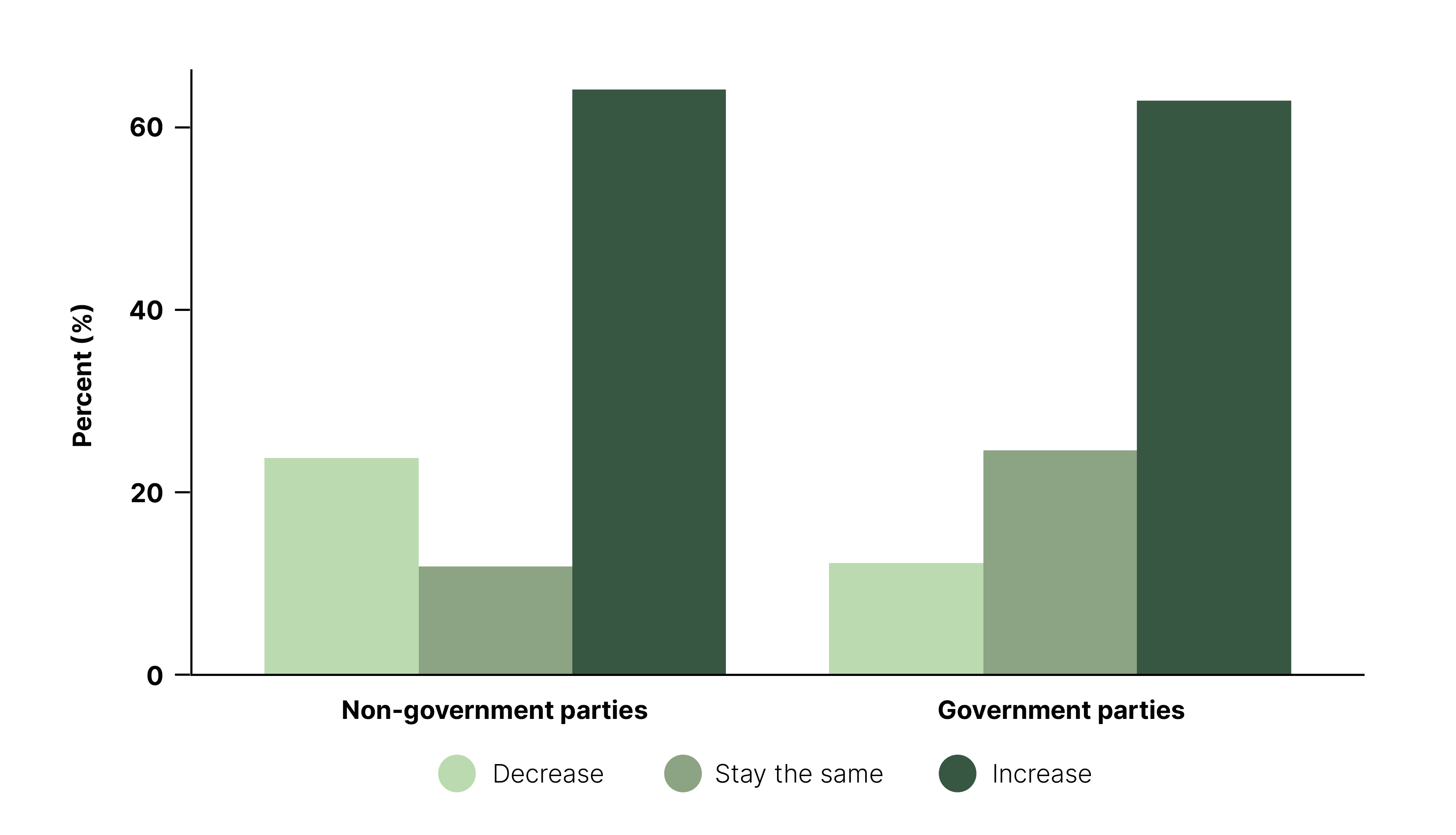
Notes: N=107 non-missing responses, for non-government parties (N=42) and government parties (N=65). Numbers by subgroup (decrease / stay the same / increase): non-government parties (10 / 5 / 27), government parties (8 / 16 / 41).
Figure 11 probes whether there are differences by partisan alignment in the perceived relevance of the UN. The findings do not suggest any substantial differences, with respondents from both government and non-government parties rating the UN as relevant.
Perceived Relevance of the UN
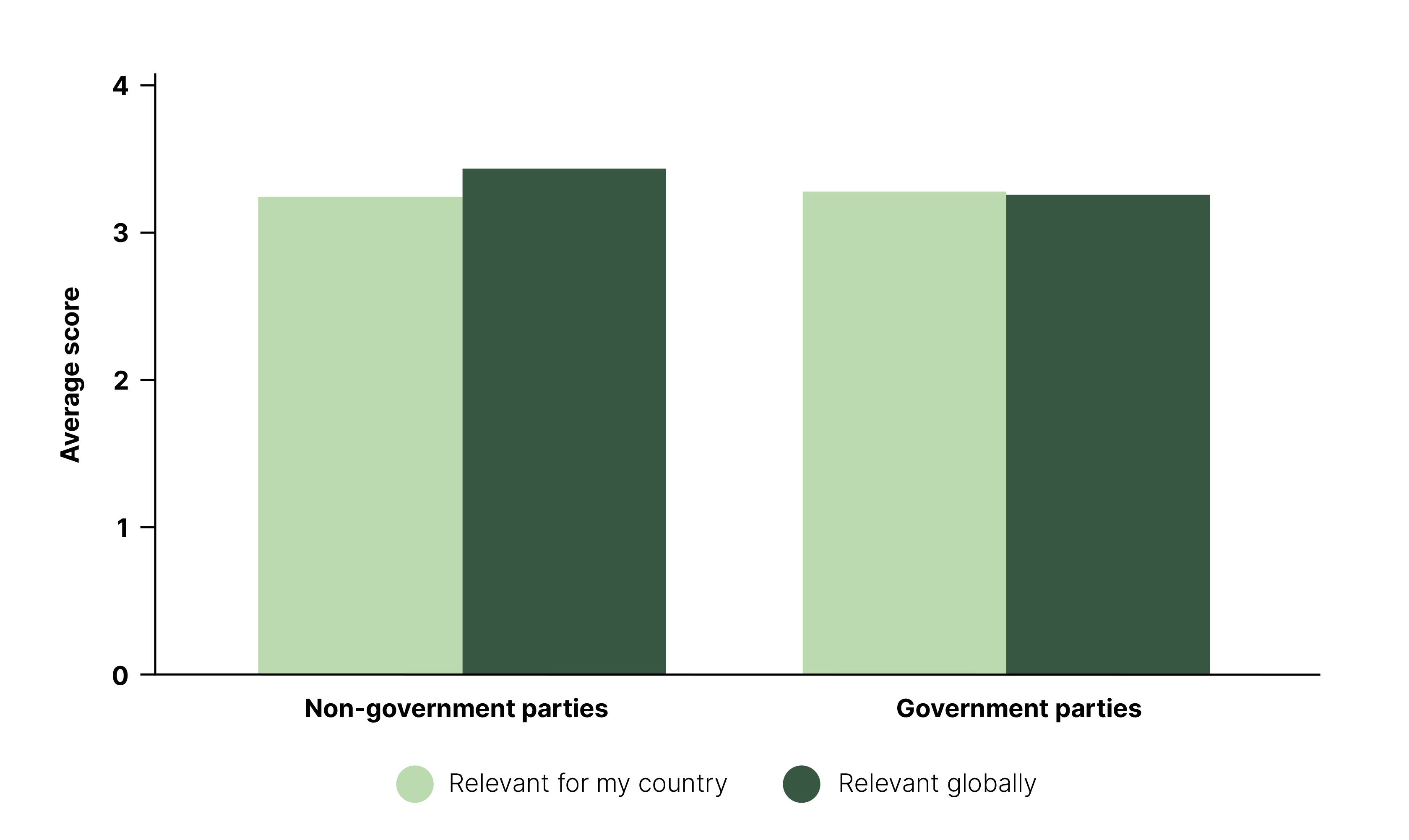
Notes: Global relevance: N=129 non-missing responses, non-government parties (N=55) and government parties (N=74). Relevance for my country: N=128 non-missing responses, non-government parties (N=53) and government parties (N=75).
In terms of the perceived effectiveness of different UN funding modalities, Figure 12 shows broadly similar perceived-effectiveness ratings for core, earmarked, and pooled funding across both partisan groups. The only variation of note is the relatively higher effectiveness ratings for earmarked funding among respondents from government parties. One possible explanation, which the survey itself cannot test, is that earmarked funding allows governments to achieve their specific preferences when working with the UN, whereas non-government parties do not benefit from this increased control.
Perceived Effectiveness of Different UN Funding Modalities
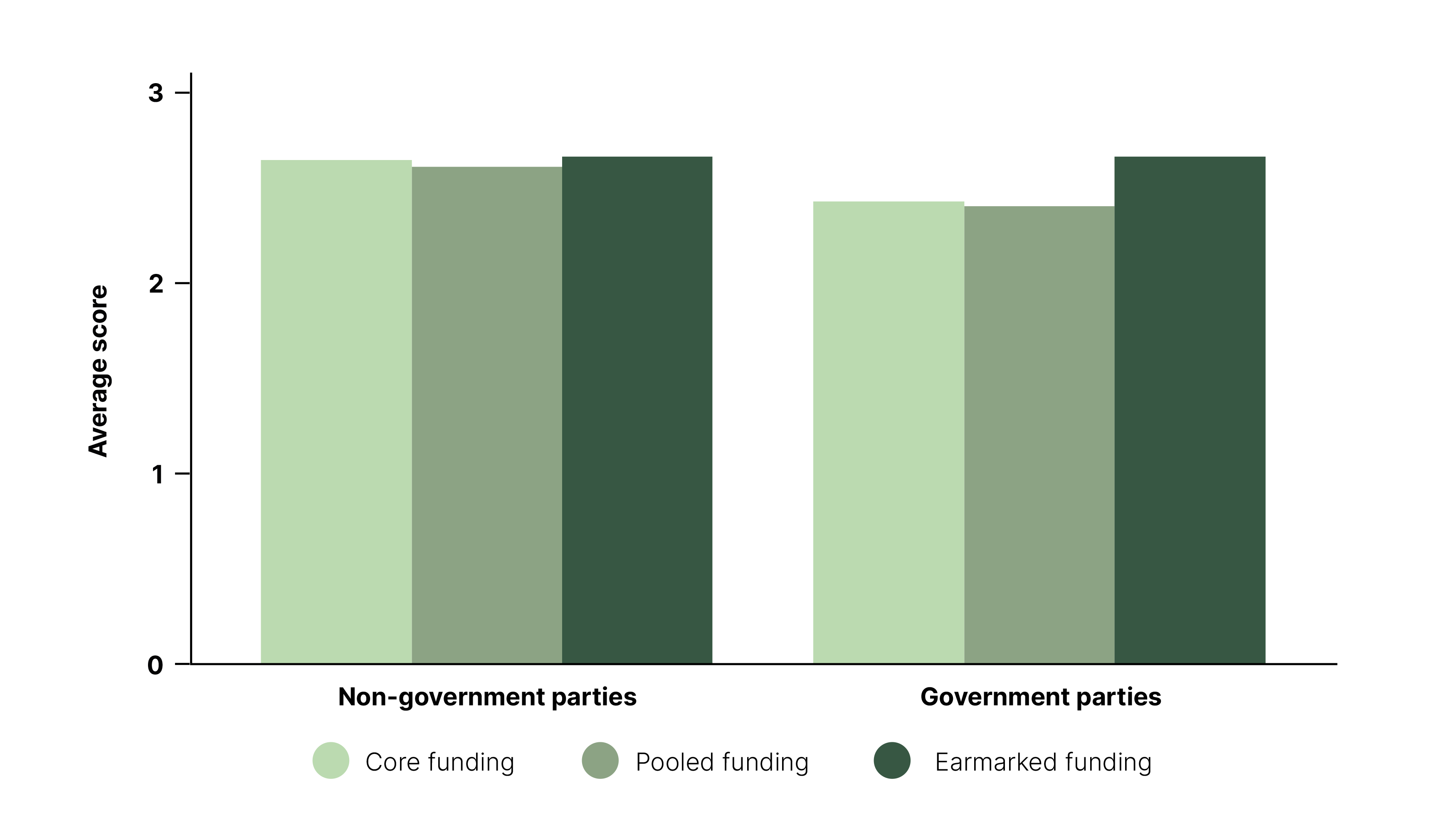
Notes: Core funding: N=107, non-government parties (N=40) and government parties (N=67). Earmarked funding and pooled funding: N=105, non-government parties (N=39), government parties (N=66). Mean scores of perceived effectiveness within each group of respondents.
Conclusion
The survey points to relatively low self-reported knowledge of UN finances among respondents, alongside limited differentiation in their ratings of different funding mechanisms. Nevertheless, several important insights emerge from the analysis:
- There is strong support among respondents for increasing UN funding, including substantial support in high-in-come countries.
- Respondents generally perceive the UN as relevant at both the national and global levels and see a major role for it in addressing poverty, conflict, human rights, and climate change.
- Respondents are supportive of penalties for the late payment of assessed contributions by Member States.
- While most of the parliamentarians surveyed are unaware of the UN80 reform process, those who are aware of it overwhelmingly support it.
The findings of the survey suggest a need to strengthen the ongoing capacity-building and awareness-raising work of the Dag Hammarskjöld Foundation and the Inter-Parliamentary Union among parliamentarians. The funding cuts currently facing the UN make such work even more important, particularly by helping parliamentarians in donor and programme countries fulfil their oversight functions.
A. B. Bayram, S. H. Schneider, J. Faust and C. Thomson, ‘Manipulating the masses? Right-wing populist messages, political ideology, and public support for multilateral development aid in Germany, the United States, and the United Kingdom’, Journal of International Development 36/7 (2024), pp. 2705–2724, https://doi.org/10.1002/jid.3927.
M. Heinzel, C. Weaver and R. Briggs, ‘Incentivizing responses in international organization elite surveys: evidence from the World Bank’, Journal of Experimental Political Science 12/1 (2025), pp. 17–26, https://doi.org/10.1017/XPS.2023.39.
E. Metreau, K. E. Young and S. G. Eapen, ‘Understanding country income: World Bank Group income classifications for FY26 (July 1, 2025–June, 2026)’, 1 July 2025, https://blogs.worldbank.org/en/opendata/understanding-country-income--w…, accessed on 30 July 2026.
M. Heinzel, B. Reinsberg and G. Zaccaria, ‘Core funding and the performance of international organizations: Evidence from UNDP projects’, Regulation & Governance 19/3 (2025), pp. 957–976, https://doi.org/10.1111/rego.12632; M. Heinzel, B. Cormier and B. Reinsberg, ‘Earmarked funding and the control–performance trade-off in international development organizations’, International Organization 77/2 (2023), pp. 475–495, https://doi.org/10.1017/S0020818323000085; M. Heinzel and B. Reinsberg, ‘Trust funds and the sub-national effectiveness of development aid: Evidence from the World Bank’, World Development 179 (2024), article 106609, https://doi.org/10.1016/j.worlddev.2024.106609.
See ‘UN80 Initiative’, https://www.un.org/un80-initiative/en/news/what-un80-initiative, accessed on 30 July 2026.
The IPU 2026 Parliamentary Hearing at the UN, https://www.ipu.org/event/2026-ipu-parliamentary-hearing-united-nations, accessed on 30 July 2026.